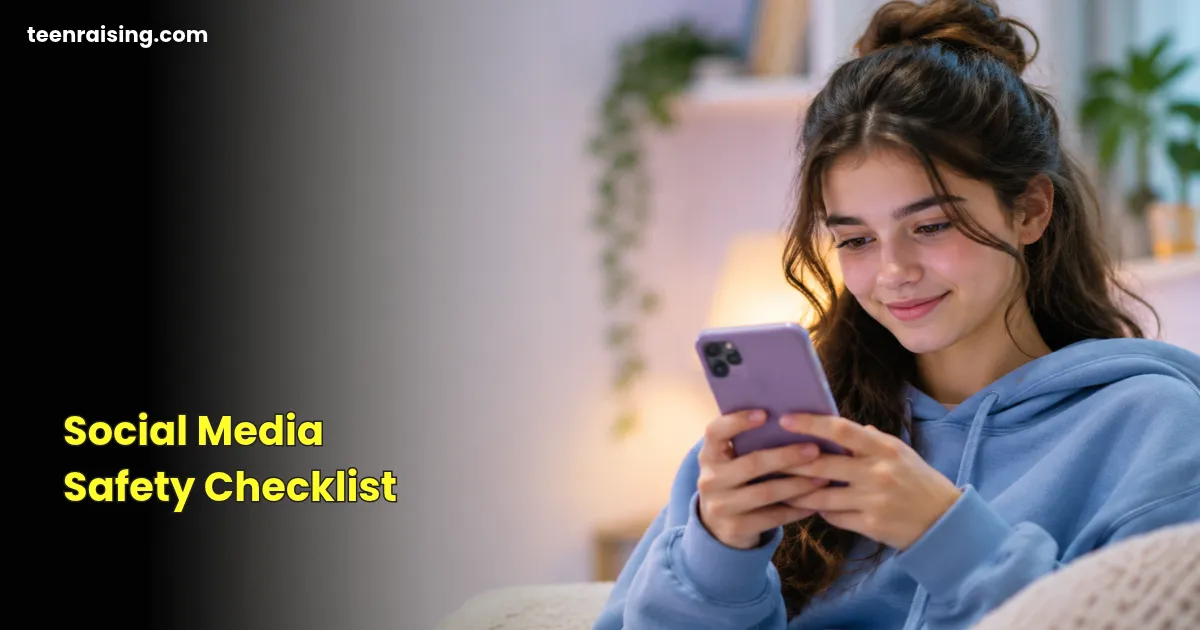

Social media is an integral aspect of a teenager’s daily life from picture posting and texting their friends to watching videos and being up-to-date on the latest trends. Nevertheless, social media poses certain dangers to teenagers that must be kept in mind by parents. It is in such a case that the Social Media Safety Checklist comes in handy for teenagers.
For parents, protecting teens while surfing the web may sometimes be very hard since you do not know whom your teen talks to, which details he or she shares, or what sort of material they see online. It would be better to begin with some basic social media safety tips for teens.
The following social media rules include 15 key tips for safer social networking, as well as some useful suggestions for parents wishing to foster good online etiquette.
Why Is Safety on Social Media Important for Teenagers?
The Internet provides teens with a platform for self-expression, gaining new knowledge, and keeping in touch with their peers. However, they may be subjected to cyberbullying, fraud, identity theft, and other forms of online abuse.
As per the American Psychological Association, the social media experience may have varying impacts on teens based on their age, level of maturity, and behavior.
The need to teach online safety for teenagers is vital since the youths cannot always perceive what dangers are lurking within an apparently innocent message.
For instance, when a teenage girl shares a picture in her school uniform, she might unknowingly give away the name of the school. Likewise, accepting a request from an unfamiliar person can put them in unwanted conversation.
Here are some simple internet safety rules for teens that may help teenagers grasp the dangers.
Social Media Safety Checklist: 15 Rules Every Teen Should Follow
This Social Media Safety Checklist can help parents initiate talks regarding proper use of the internet. Have your teenager go over this checklist about digital boundaries on a regular basis.
1. Social Media Accounts Should Remain Private
Checking whether your social media accounts have private settings is one of the initial steps in using social media safely. With public accounts, all information is visible to everyone.
Teenagers need to:
- Make their profile private.
- Monitor the list of people who follow them.
- Not accept friends from people they do not know.
- Screen who can comment on their posts.
These social media privacy settings allow teenagers to have more control over how much unwanted attention they get.
2. Never Share Personal Information
Teenagers should be careful not to share any information that could make it possible for anyone else to identify or locate them. Any kind of information will do.
Things that should be kept private are:
- Address and phone number of your house.
- Name of school and daily schedule.
- Location of residence and travel arrangements.
- Passwords and money-related information.
Teaching online privacy for teenagers will help them to comprehend the need to keep personal data confidential even when dealing with people who seem amicable.
3. Think About Your Image Before Posting
A photo uploaded to the Internet can reach far more places than one could expect. Even if a teen deletes their post, a screenshot might have been taken beforehand.
Before posting anything, ask them to think:
- Am I comfortable having my family or teacher see this?
- Is my location or school identifiable from this picture?
- Can this content be misused in some way?
These are some very basic digital safety tips for teens which need to be followed by teenagers at all times.
4. Do Not Accept Friendship Requests from Unknown People
Not all social media profiles belong to a real person; there are profiles with pictures, information, and identities that have been stolen to deceive and win someone’s trust.
Teenagers should never accept requests from unknown people, nor should they accept when anyone becomes very inquisitive all of a sudden.
Protecting teens on social media starts by enabling them to identify dubious activity online.
5. Never Tell Anyone Your Password
Sometimes even close relationships can become distant. By sharing your password, you give someone else access to your private correspondence and pictures.
Teenagers should:
- Make strong and unique passwords.
- Not give their login details to friends.
- Have two-factor authentication if possible.
- Not log in using public or shared computers.
These tips ensure that teenage online safety is improved and that account hacking is minimized.
6. Identifying and Reporting Cyberbullying
Cyberbullying may occur via nasty comments, embarrassing photos, threats, or even online stalking.
It is important for parents to tell their teenagers that they need not accept this kind of treatment.
In the case of cyberbullying, it is important for them to:
- Not engage in an abusive dialogue.
- Take screenshots of the abusive messages.
- Block the sender of the message.
- Complaint about the message or account.
- Confide in an adult they trust.
Cyberbullying prevention for teens involves developing a situation where the youth can freely ask for help.
7. Do Not Click on Suspect Links
There are a number of online scams that try to entice users by offering fake giveaways, prizes, free followers, or discount offers.
Teens must not click on suspect links sent by unknown accounts. They must also avoid logging in on sites via unexpected messages.
These are important social media safety tips for teens, especially as Internet scams become increasingly believable.
8. Turn Off Unnecessary Location-Sharing Options
The location-sharing options available on apps can provide information about where teens stay or hang out.
Parents need to discuss why sharing locations can expose them to unnecessary risks.
Educate teens to:
- Disable location features for any posts that are publicly available.
- Discourage posting live locations.
- Check privacy settings regarding the location.
- Turn on location tracking features only for trusted individuals.
It is essential in terms of protecting teens on social media.
9. Be Careful When Chatting with Online Friends
Not all those who teenagers interact with online have good intentions. They may pretend to be of their age to gain their trust and start chatting privately.
Whenever one asks for photos, personal information, money, or a personal meetup, teenagers should stop interacting and inform an adult.
Parents should deal with such matters with maturity rather than making teenagers feel embarrassed and scared.
10. Never Share or Forward Negative Messages
Sending negative messages, such as offensive jokes, private photos, or rumors, can damage others and have lasting effects.
Teenagers need to learn that they will be accountable for any information that they forward, even if they did not come up with it.
Responsible sharing is an integral aspect of safe social media use for teens.
11. Social Media Follower Checks Should Be Conducted Periodically
A list of followers is prone to rapid changes, particularly when teens get involved in Internet trends and public discussions.
They should be encouraged to eliminate any unfamiliar and questionable profiles from their list of friends.
Routine account checks facilitate improved social media privacy settings and enable teens to have more control of their spaces online.
12. Do Not Believe All That You See On The Internet
The Internet has many doctored images, videos that mislead people, news hoaxes, and unrealistic lifestyles.
The youth need to develop critical thinking skills and learn how to analyze their online findings before sharing anything.
Another aspect of online safety for teenagers involves an understanding of misinformation.
13. Establish Screen Time Limits
Excessive screen time can get in the way of proper sleep, studying, exercising, and personal interactions.
Reasonable restrictions regarding screen time include:
- Not having phones during meal times.
- Not using social media before sleeping.
- Taking periodic breaks from the screen.
- Putting homework and outdoor activities first.
Healthy guidelines ensure that safe social media use for teens becomes sustainable.
14. Maintain Social Media Applications Up-to-Date
App updates normally come with some improvements in terms of security and privacy. Not having your app up-to-date makes it prone to any possible security issues.
Teenagers should have their social media apps set to automatically update themselves.
This will help make digital safety tips for teens even better.
15. Discuss with Your Parents If You Feel Suspicious
The most critical point here is to seek help if you feel that something on the internet is wrong, threatening, or suspicious.
It is crucial that teenagers understand that they can talk to their parents without the fear of being punished immediately and having no phone access anymore.
Clear communication ensures that social media safety for parents and teens becomes a mutual obligation and not one of surveillance.
How Do Parents Protect Teenagers Online?
The parents’ job is to help the kids learn good habits when it comes to their online behavior. However, safeguarding the teenagers is not about reading every single message.
Here are some methods of promoting responsibility:
- Have discussions: Talk to teens about what applications they use and who they talk to.
- Establish norms: Set reasonable limits when it comes to posts, messages, and using technology.
- Get familiar with popular apps: Learn about the security settings of applications like Instagram, TikTok, and Snapchat.
- Respect their privacy: Justify your actions by explaining your reasons rather than going through their accounts secretly.
- Become an example: Observe the same standards of responsibility yourself.
These social media safety tips for parents will assist the family in setting up an environment that will make teenagers feel free to talk about their online troubles.
Also read: Instagram and TikTok Safety Tips for Teens: A Parent’s Guide
What Should Not Be Shared by Teenagers on Social Media?
Teenagers should not share any information that may jeopardize their personal identity or privacy.
| Information to avoid sharing | Why it matters |
| Home address | Can show where they live |
| School details | Can expose their everyday schedule |
| Phone number | Can cause them to be contacted |
| Passwords | Can end up being account hacking |
| Live location | Can show their current location |
| Private photographs | Can be saved or distributed without consent |
| Financial information | Can make them vulnerable to scams |
Parents can use this list when teaching teenagers how to keep teenagers safe on social media and why privacy matters.
This checklist is ideal for parents who wish to teach their children how to keep teenagers safe on social media and why privacy is important.
Key Message: Be Safe on the Internet on a Daily Basis
The social media platform should not be completely prevented by parents for their teenage children. Rather, the aim should be to make them aware of the risks involved in using it.
A practical social media safety checklist provides guidelines for adolescents to adhere to while interacting on social networks through posting, commenting, messaging, etc.
It is essential to keep in mind that teen online safety does not depend on restrictions only but on awareness, trust, communication, and responsibility.
Begin with some basic rules and review them together; encourage your teen to voice their concerns whenever anything they see online is uncomfortable. Small steps now can make them more confident and responsible in the future.
Also read: Keeping Teens Safe Online: A Practical Guide for Parents



[…] social media safety for teens, parents should look beyond screen-time numbers and consider what teenagers are experiencing while […]
[…] is why social media safety for teenagers shouldn’t be limited to setting time on screens per […]
[…] Teen social media safety education includes: […]