
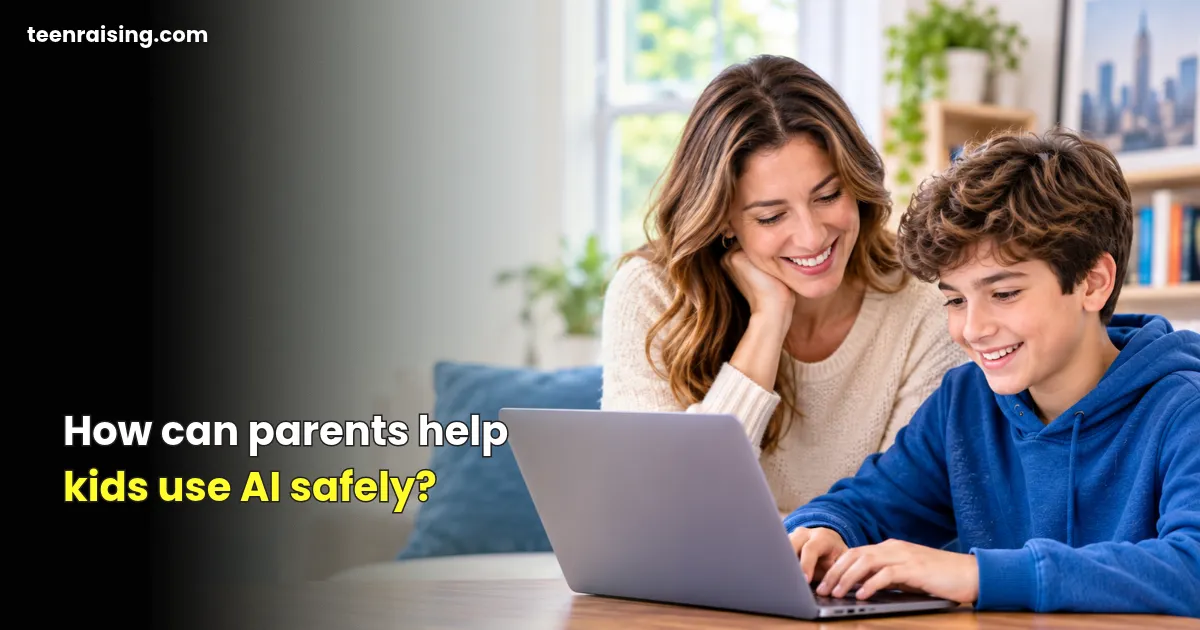

AI has now become an integral aspect of learning, playing, creating, and interacting for children. Irrespective of whether it is to complete homework, generate images, or resolve basic questions, the use of AI tools by kids has been growing. But along with the way such tools are being used, it is important to know How Kids Can Use AI Safely. This knowledge can be gained through setting appropriate limits for children, making them safeguard themselves against any breach of privacy, promoting critical thinking skills, and talking openly about online interactions with children. Acquiring the knowledge of How Kids Can Use AI Safely will not only benefit them in the present but also later in life as well.
You don’t have to be an expert on AI to raise your children. By observing some basic principles, having frequent discussions, and learning from one another, you will see your teenagers using AI responsibly and keeping their privacy intact.
Safe and Responsible Use of AI Technologies for Children
Safe use of AI is about enabling kids to know the potential and limitations of AI technologies, keeping their personal data safe, and making use of AI tools that help kids learn instead of think.
Responsible use of AI technology also involves challenging information generated by AI, respecting others on the Internet, refraining from posting harmful material, and disclosing the use of AI.
How AI can benefit kids:
- For comprehending hard school lessons.
- For generating new ideas and projects.
- For developing writing skills.
- For honing problem-solving skills.
- For discovering new interests.
Nevertheless, there are cases when artificial intelligence creates misinformation, has biases, generates misleading pictures, and exposes users to improper content. Parents have to educate children on both the advantages and disadvantages.
1. Discovering AI Tools with Your Child
One of the simplest AI parenting tips would be discovering AI tools with your child, rather than making your child learn about using AI tools independently. It would be useful to ask your teenager to demonstrate how he or she uses AI for studies and creative activities.
Engage in a quick exercise. Get an AI technology to describe the functioning of the solar system, to propose a science project, or to compose a small story. Discuss the answers that you receive. Are they correct? Logical? Do you have any doubts about them?
This will help parents learn about the functioning of AI and make the kids feel at ease when talking about their internet experience.
Before using this platform regularly, make sure to find out whether it is suitable for your child’s age.
“If you are unsure where to begin, Common Sense Media’s Parents’ Ultimate Guide to Generative AI offers helpful information about AI tools, their uses, and potential risks for children.”
2. Teaching Kids How to Safeguard Their Personal Information
The first step in AI safety for kids is learning about privacy. AI applications take information that users provide through various conversations, prompts, images, and files. Sometimes kids do not know that providing some personal information poses privacy risks.
Tell them not to share the following information with an AI chatbot program:
- Full name, address, or telephone number.
- Name of school, classes, or schedule.
- Usernames, passwords, financial information, or account numbers.
- Photos or pictures of themselves or other people.
- Confidential conversations with family members or personal documents.
Educate your teenager on taking time before posting a photo, submitting documents, or providing any information about themselves on AI platforms.
One great tip for your family would be to make it a rule that they shouldn’t use AI if they wouldn’t post anything online.
Parents can also explore the American Academy of Pediatrics’ guidance on how artificial intelligence affects children to better understand the potential benefits and risks of AI in children’s lives.
3. Encourage Children to Challenge AI Responses
Artificial intelligence can produce responses which may sound convincing, yet could include wrong information or outdated facts, or be biased. Children need to realize that an AI response does not have to be right.
Teaching kids about artificial intelligence must include understanding how to question and confirm its information.
Advice for teens
- Use online sources, books or teachers to verify critical facts.
- Search for supportive facts when AI states some facts.
- Doubt the answers if they look too easy, too extreme or biased.
- Avoid using AI for critical decisions about health and other personal matters.
For example, if AI clarifies something about history, make sure to motivate your teen to compare this explanation with the information provided in his/her history book.
This will help to develop critical thinking skills, as well as boost children’s self-confidence while using the Internet.
4. Establishing Family Rules About AI
Build AI guidelines for parents and children to ensure smooth interaction with technology. Rather than excluding AI from your household life, create rules encouraging appropriate use.
The family rules must be realistic, suitable for kids of different ages, and negotiable. Discuss these rules together with your teenager to explain their importance.
| Family AI rule | What it means |
| Use age-appropriate AI tools | Ensure age restrictions and privacy features are considered. |
| Protect personal information | Avoid sharing personal information and passwords. |
| Ask before uploading images | Respect your privacy as well as other people’s. |
| Use AI for learning | Use AI for explanation and ideation, but not just copying. |
| Take regular breaks | Ensure balance between AI use and hobbies and family. |
| Talk about uncomfortable experiences | Report inappropriate or offensive responses. |
Clearly defined family guidelines can have a profound impact on How Kids Can Use AI Safely. The fact that teens will know exactly what is expected from them, what information should be considered confidential, and how to ask for help will ensure that they will use AI responsibly.
5. How to Help Teenagers Utilize AI for Homework without Cheating
AI applications can help in education in situations when teenagers utilize AI applications to grasp ideas instead of solving assignments in a lazy way. But too much dependence on AI may influence thinking, writing, and creativity negatively.
Parents are supposed to promote responsible AI use for kids through guidance on distinguishing learning from using AI and getting AI to do children’s work.
Here are some safe ways for teenagers to use AI technology for academic purposes:
- Use the AI to explain an academically complex math question.
- Creating practice questions before an exam.
- Breeding ideas for a class presentation.
- Smoothing out grammar and spelling errors in their writing.
- Creating revision notes on topics that have been previously studied.
- Seeing various angles to a topic.
For example, instead of using AI to write the whole essay regarding climate change, your teen can use AI to tell them what the essay is all about, give them some ideas regarding the structure of the essay, or even questions for research.
Tell them to follow the school rules regarding AI. There are some teachers who allow AI help with brainstorming and editing, and there are those who do not allow any AI at all.
6. Consider AI-Generated Images, Deepfakes, and Cyberbullying
AI is capable of generating realistic images, videos, audio recordings, and messages. Although such technology has its creative applications, it may also be exploited for purposes of impersonation, propaganda, and cyberbullying.
Teenagers should know that manipulation of images involving classmates, friends, teachers, or any individuals without their consent may have negative consequences on their life.
Discuss the following topics:
- Synthetic photos and videos created by artificial intelligence.
- False voices to imitate someone.
- Hoaxes created by artificial intelligence.
- Cyberbullying through synthetic photos or messages.
- Sharing false content without verifying it.
Keep in mind that simply because there is photographic evidence of an occurrence does not mean that it has occurred. It is important to remind your teen that he or she must not distribute any suspicious photos or videos, but should notify the appropriate people.
The importance of respect, consent, and empathy cannot be overlooked despite the ease of producing content via technology.
7. Set Up Barriers for AI Chatbots and Emotional Support
There are some teens who would choose to use AI chatbots when they are lonely, anxious, confused, or embarrassed about speaking to a person. It is true that the chatbot may speak in a friendly way; however, the chatbot will not have human emotions, judgement, or perception.
AI cannot take the place of true interpersonal relationships, adults, guidance counselors, or other mental health experts.
Parents must guide their teenage children to turn to humans for assistance when they face anxiety, depression, bullying, family conflicts, and other issues.
Don’t shame your kids about employing AI to talk about their emotions. Listen, try to understand what your children need, and help them connect with suitable humans.
8. Respect Teen Privacy While Remaining Connected
Monitoring teen digital activity by parents can assist in keeping teens safe; however, too much monitoring can cause harm to the relationship that exists between parents and teenagers.
Instead of silently monitoring each and every interaction, consider transparency when it comes to AI.
Some strategies include:
- Question your teen about which AI they use frequently.
- Conversations about the type of prompts and questions they put into these programs.
- Explore parental controls together when available.
- Determine when parents should be allowed to monitor activities for safety.
- Foster open communication among teens about any disturbing interactions.
Safe AI use for teenagers is only possible when they feel secure enough to ask questions without fear of instant punishment.
When children trust their parents, they will be willing to reach out for help if any kind of inappropriate content is generated through AI technology.
9. Inspire Creativity and Non-Digital Engagement
AI can make daily life simpler, yet kids also require activities that are not screen-based. Through offline activities, kids get to enhance their creativity, communication skills, emotions, and problem-solving.
Encourage your teenager to strike a balance between AI usage with:
- Reading books and writing on their own.
- Delighting in physical activities and going outside.
- Mastering music, painting, cooking, or any other craft.
- Interacting with their peers and relatives.
- Solving problems without using AI right away.
- Getting involved in activities that require patience and imagination.
However, AI is a great tool to help children explore concepts, but there is a possibility that it will turn into an automatic response to every inquiry or problem.
This type of behavior is crucial in training children about How Kids Can Use AI Safely without restraining their curiosity. Teenagers who learn how to use technology along with developing creativity and socializing skills can get all the advantages of AI.
Checklist for Parents and Teenagers on AI Safety
Utilize this easy checklist in assessing your family’s use of AI.
Our Family AI Safety Checklist
- Age-appropriate AI tools are employed.
- The workings of the AI system are known.
- No sharing of passwords or sensitive personal information takes place.
- The authenticity of AI-produced data is confirmed first.
- School policies about AI use are adhered to.
- Respect for the privacy of other individuals is maintained.
- Avoiding bullying, impersonating, and hurting others through AI is followed.
- AI does not provide help regarding emotions or mental health.
- Good AI policies at home have been agreed upon.
- Uncomfortable conversations about AI can take place.
- Human interaction and non-AI-related activities have their place too.
Parents and teenagers can return to this checklist every few months as AI technologies, school policies, and family needs evolve.
Developing Good and Healthy AI Practices at Home
Teaching children how to use AI in a safe way does not mean that parents must know all about the latest technologies. It means that they need guidance, open dialogue, limits, and learning.
By training their children how to take precautions against invasions of privacy, challenge AI generated information, be respectful to other individuals, and use technology responsibly, parents are nurturing capabilities that transcend AI. These behaviors make the teenagers ready for a digitally-driven environment.
How Kids Can Learn to Use AI Safely is not about shielding them from technology. Rather, it is about enabling them to think critically, see dangers, and use AI as a tool to assist them in growing up rather than controlling them.
Also read: Keeping Teens Safe Online: A Practical Guide for Parents