

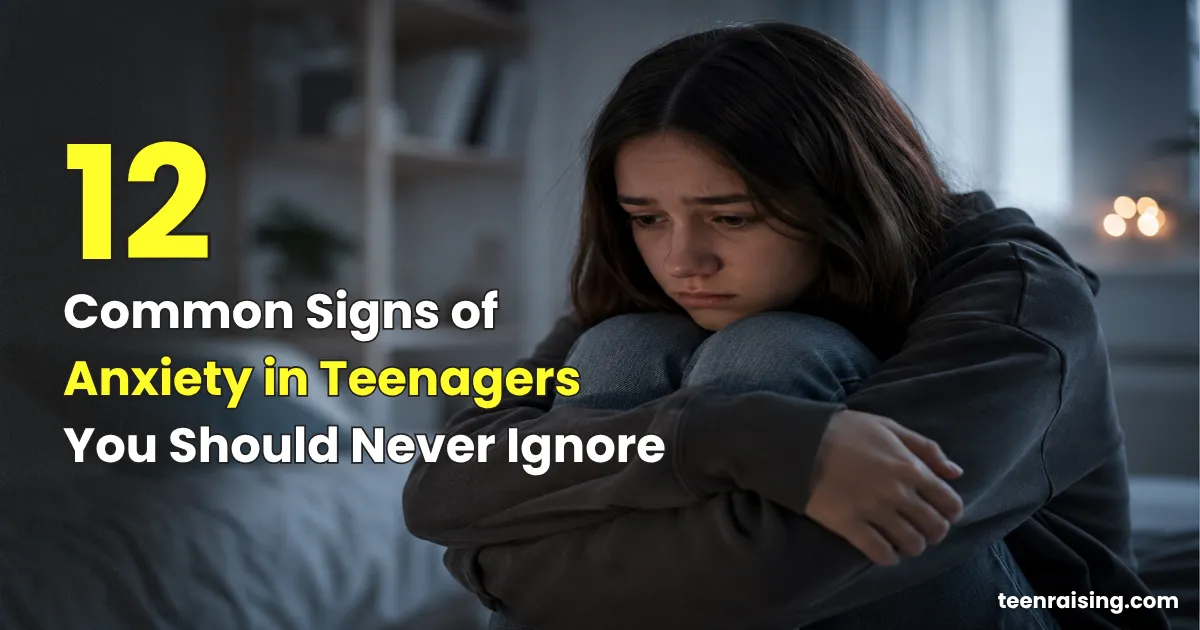

Adolescence brings with it a number of physical and emotional changes. Mood swings, interest changes, and the need for freedom are some of the symptoms of the transition period. Nonetheless, at times, what appears to be “normal teenage behavior” might actually be one of the 12 common signs of anxiety in teens.
According to experts in psychology, anxiety disorders are among the most common psychological illnesses faced by adolescents in America. If not addressed on time, anxiety may cause a teenager to suffer academically, socially, and even emotionally. Fortunately, identification of the signs helps parents provide support before anxiety becomes too much to handle.
This guide presents 12 common signs of anxiety in teenagers, explains the reasons behind them and provides methods that will help you keep your adolescent calm and secure.
Reasons for Ignoring Teenage Anxiety
Parents often assume that their children are just being “dramatic” and “going through a phase.” It’s true that adolescence causes mood swings, but it doesn’t necessarily mean that constant worry or fear interfering with everyday activities is just normal.
The problem is that manifestations of teenage anxiety symptoms among teenagers can differ. Some children become shy, others irritated or perfectionist. They may even get physically ill because of their feelings.
A True Story That Many Parents Can Understand
Sarah, an Ohio-based parent, realized that her 15-year-old son, Ethan, was no longer playing his favorite sport, basketball. Initially, she presumed that Ethan had just lost interest. In a short while, Ethan began complaining about stomachaches, staying up very late, and getting irritated with minor issues before school.
After consulting with a school counselor, she found out that those were not symptoms of laziness or stubbornness. They were some early warning signs of anxiety in teens. With proper counseling and discussion, Ethan got back his confidence to do what he likes.
Ethan’s story is just an example of how anxiety is concealed by normal things we do in our lives.
Top 12 Signs of Anxiety in Teenagers
1. Worrying about Daily Life Situations
Excessive worrying is one of the main indicators of anxiety among teens. Your teenager will feel afraid of messing up and letting everyone down, even for something that isn’t worth getting upset about.
Such worrisome thoughts aren’t typical and don’t subside after being comforted.
2. Abrupt Mood Shifts
The mood swings that are commonly seen among teens with anxiety disorder can be one of the most obvious emotional signs of anxiety in teenagers. While some would express fear through their actions, others would show anger, frustration, and emotional detachment.
Many parents take these mood changes for granted without realizing that the child suffers from anxiety disorders.
3. Not Wanting to Go to School Or Engage In Social Activities
If your child starts avoiding social occasions at school, sports, birthday parties, or just hanging out with friends, chances are that he/she could be dealing with anxiety.
Some of the commonest behavioral signs of anxiety in teens include avoidance of anything stressful or unpredictable.
Avoid asking “why don’t you want to go?” Instead ask “is something bothering you about today?”
4. Frequent Physical Complaints
The effect of anxiety goes beyond psychological impact and can cause various physical symptoms.
Here are some of the frequent physical symptoms of anxiety in teens:
- Headaches
- Stomach pain
- Feeling nauseous
- Muscular tension
- Fatigue
- Racing heart
In case no physical disorder is diagnosed by doctors, then anxiety may be the cause.
5. Trouble Sleeping
Many teens who suffer from anxiety often find it hard to shut off their thoughts when it is time for bed.
They may have:
- Trouble falling asleep
- Problems staying asleep all night
- Nightmares
- Exhaustion despite adequate hours in bed
Sleep issues often exacerbate anxiety, leading to an impossible cycle.
6. Perfectionism
It might come as a surprise to many parents that perfectionism is actually closely related to adolescent anxiety.
A teenage individual could spend many hours revising his or her homework, become anxious about small errors, or simply not try anything new because of the fear of failure.
7. Lack of Concentration
The mind of an anxious person is always busy thinking about the potential issues rather than the present.
Therefore, some of the symptoms of anxiety in teens can be:
- Forgetting things
- Unable to complete homework assignments
- Lack of concentration
- Low grades
Teachers may be among the first people to recognize these symptoms.
8. Greater Irritability and Anger
All anxious teens do not necessarily seem nervous.
Sometimes anxiety is seen as:
- Arguments
- A bad temper
- Getting annoyed with little things
- Outbursts of emotion
This is mainly due to the fact that the brain is always on fight or flight mode.
9. Withdrawal from Family and Friends
Should you notice that your child spends too much time alone than ever before, take note.
Social withdrawal is among the common signs of teenage anxiety, particularly when paired with feelings of sadness, fear or disinterest in hobbies.
While all teenagers need their space, absolute seclusion must not be overlooked.
10. Teen Panic Attacks
Teenage panic attacks are characterized by the onset of sudden and intense feelings of fear.
Some of the symptoms include:
- Pain in the chest
- Breathing problems
- Dizziness
- Sweating
- Shaking
- Loss of control
Despite their scary nature, teenage panic attacks are very manageable.
11. Incessant need for reassurance
Anxious adolescents are likely to frequently pose questions like:
- “Are you sure that everything is going to be fine?”
- “Have I done anything wrong?”
- “Are you angry with me?”
Though reassurance might provide temporary relief, seeking incessant reassurance is an indication of deeper anxiety.
12. Losing interest in activities one used to love
Among the most ignored symptoms of anxiety disorders among teenagers are those involving the loss of interest in favorite activities.
Sports, music, school clubs, or even family get-togethers might be too stressful because of anxiety draining emotional energy.
Once anxiety starts becoming a barrier to enjoyment and routine, it becomes an issue.
How Anxiety Affects Teenagers
The effects of anxiety on teenagers help parents to react with compassion rather than frustration.
Anxiety left untreated can affect:
| Area | Effect |
| School | Inability to concentrate, poor grades, absenteeism |
| Friendships | Social withdrawal and isolation |
| Physical Health | Headaches, stomach pain, sleep problems |
| Family Life | Increased conflict and emotional distance |
| Self-Esteem | Fear of failure and constant self-doubt |
Early intervention can lessen the lasting effects of anxiety.
How to Identify Anxiety in Teenagers
Many parents wonder how they can identify anxiety in teens before it gets worse.
Look for patterns rather than single events.
Consider these questions:
- Has this been going on for at least a few weeks?
- Is it interfering with my teen’s schooling, socializing, or home life?
- Is my teen anxious most days?
- Has there been an increase in physical complaints?
If you answered “yes,” it may be time to talk with your teen’s pediatrician, school counselor, or a qualified mental health care provider.
Early warning signs of anxiety in teens allow families to get help while the situation is still manageable.
How Parents Can Help a Teenager with Anxiety
A number of parents ask how parents can assist a teenager suffering from anxiety without aggravating the situation.
The following ways will be helpful:
- Listen attentively without interrupting.
- Support the child’s feelings saying, “I see how hard this is for you.”
- Promote proper sleep, exercises, and healthy eating.
- Reduce stress regarding grades or anything else.
- Learn some relaxation methods together, like deep breathing exercises or mindfulness.
- Consider counseling if anxiety is hindering everyday activities.
Keep in mind that coping with teenage anxiety is a process and requires time and effort.
Observe the Signs, Begin the Discussion
In conclusion, the symptoms of anxiety among teens do not always shout out for help. They can show themselves through a headache, irritability, perfectionism, or withdrawal from loved ones. Being aware of these subtle changes can have huge consequences in the life of your teen.
As a parent, there is no need for you to know everything. Most times, being open-minded and listening will be the best step forward. As a parent, it is important for you to recognize the teenage anxiety symptoms and respond to them appropriately, which in turn will give them the ability to grow into strong adults.
Little talks now save big problems later.
Also read:
Understanding Stress, Depression, and Anxiety in Teenagers: Signs, Causes & Support
12 Active Listening Skills That Will Help Parents Talk with Teenagers

[…] Also read: 12 Common Signs of Anxiety in Teenagers You Should Never Ignore […]