

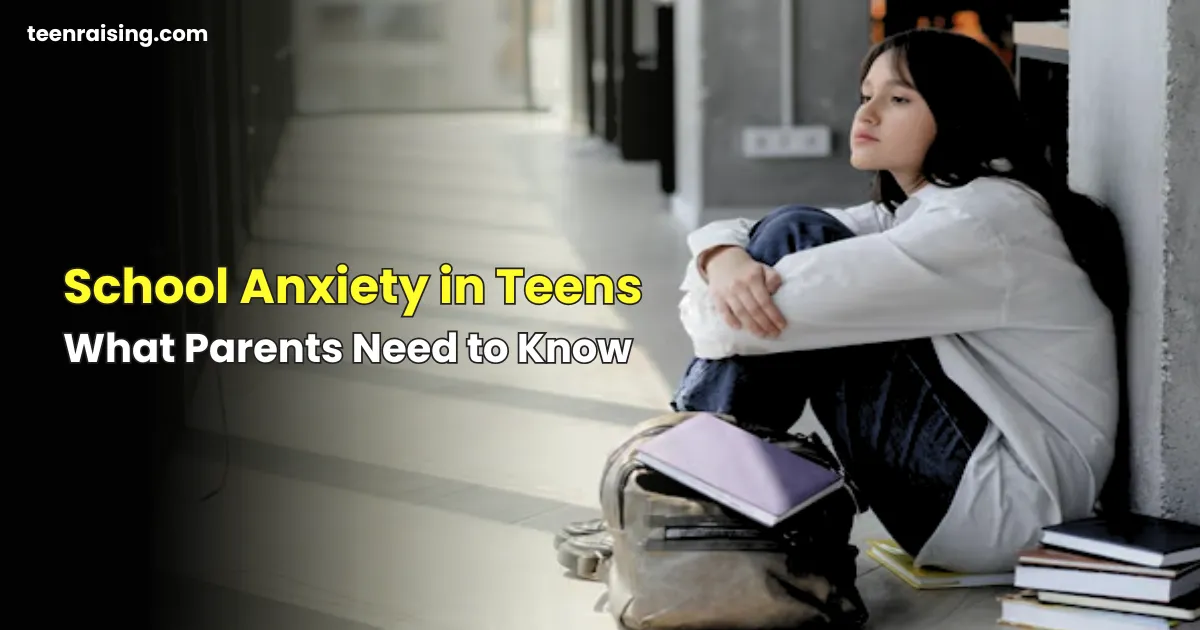

For most adolescents, school isn’t just a place for learning subjects, doing homework and having tests. There can be pressures too, such as social problems, fear of failure, bullying and having to compete with all other students.
Some stress before a test or a presentation is normal. However, when the fear begins to affect a teenager’s sleeping pattern, ability to concentrate, friendships, academic performance, or even attendance in school, parents should be concerned.
School Anxiety in Teens may vary depending on the individual teenager. Some teenagers may openly admit to being anxious while others may become withdrawn, irritable, lethargic, or even start making excuses not to go to school.
Fortunately, parents have a huge part to play in this scenario. All it takes is some patience, communication, school cooperation, and professional assistance if need be.
What Is School Anxiety in Teens?
School Anxiety in Teens consists of fear, worry, and/or discomfort that is linked with going to school or any other situation associated with school.
The thing is, it should be recognized that anxiety does not always manifest itself overtly. An adolescent might not express his/her feeling in such a way: “I feel anxious about school”. On the contrary, they will say:
“I’m not feeling good today.”
“I don’t want to come today.”
“I hate this school.”
“I can’t do this.”
“My stomach is hurting.”
“I could not sleep last night.”
The American Academy of Pediatrics (AAP) reports that anxiety may prevent you from doing usual things like attending school, and physical symptoms may consist of stomach issues, headaches, exhaustion, and lack of concentration.
Is School Stress the Same as School Anxiety?
Not necessarily.
School stress is quite common. It could be that a teenager feels stressed about an upcoming test and relieved after the test. Anxiety can become problematic if it is severe, frequent, or starts to interfere with daily functioning.
| Normal School Stress | Possible School Anxiety |
| Feeling nervous before an exam | Anticipation of school days before hand |
| Felt better after the stress | Anxiety persists even after the situation |
| Continues to attend school | Requests often to be allowed to stay at home |
| Capable of concentrating with assurance | Unable to concentrate due to fear |
| Temporary sleep issues | Difficulty with sleep persistence |
| Capable of discussing the problem | Avoids talking about the problem |
However, having anxiety does not mean that the concerned individual has a generalized anxiety disorder.
Also read: 12 Common Signs of Anxiety in Teenagers You Should Never Ignore
What Are the Causes of School Anxiety in Teens?
There isn’t a single cause for the same. The causes of school anxiety in teens include the following:
1. Academic Pressure
Good grades, tough classes, college preparation, Advanced Placement or honor classes, and fear of letting one’s parents down can be extremely stressful for some teenagers.
Someone who previously enjoyed going to school might start to think, “What if I don’t succeed?” or “What if everyone else is more intelligent than me?”
2. Social Pressure
Friendships become extremely important during adolescence. Problems with friends, social rejection, embarrassment, or pressure to fit in can make school feel overwhelming.
The AAP also identifies concerns about school, friends, activities, embarrassment, and self-confidence among issues that can be associated with anxiety in teens.
3. Bullying or Peer Conflict
Bullying can create a feeling of insecurity for a teenager at school. Even after the bullying is over, the teenager might still fear meeting those same students again.
The parents should take complaints about bullying very seriously instead of just telling the teenager to “ignore it.”
4. Fear of Failure
For some teenagers, self-respect is tied up in grades and accomplishments. One poor grade is all it takes for a child to think of him or herself as being “not good enough.”
Parents can assist teens by detaching performance from self-worth. A poor grade is just an obstacle to overcome.
5. Changes at Home or in Life
Issues such as family conflict, divorce, relocation, sickness, or even death can cause stress in one’s life. The effects of such stress could be seen through a change in behavior at school.
Signs of School Anxiety in Teens Parents Should Watch
The symptoms of school-related anxiety in adolescents may not be obvious or dramatic at first. Instead, they may slowly develop into a pattern.
Look out for:
- Headaches or stomach aches before school
- Difficulty sleeping or falling asleep
- Irritability or mood swings
- Obsessive worrying about school
- Difficulty focusing or concentrating
- Avoiding activities at school
- Detaching oneself from friends
- Repetitive pleadings to remain at home
- Badly performed in academics
- Moaning or getting irritated before attending school
- Tiredness despite having slept well
- Panic-like symptoms
- Avoiding going to school
Adolescents may also exhibit signs of being unusually quiet. An outgoing adolescent who abruptly becomes uncommunicative regarding his or her experiences at school should raise concerns as well.
The AAP elaborates on the possible signs of anxiety that include behavioral symptoms such as irritability, avoiding things, insomnia, difficulties with concentration, and physical complaints.
Physical Symptoms of School Anxiety in Teenagers
The body’s stress reaction can lead to physical manifestations, because anxiety doesn’t just affect the mind.
Common school anxiety symptoms in teenagers include:
| Physical Symptoms | Emotional or Behavioral Symptoms |
| Headaches | Over worrying |
| Stomachaches | Irritability |
| Nausea | Fear of failing |
| Fast heartbeat | Avoiding things |
| Sweating | Trouble focusing |
| Muscle tension | Withdrawing socially |
| Fatigue | Many requests to stay at home |
| Trouble sleeping | Panic or terror |
These symptoms should not be immediately attributed to anxiety, as there may be many reasons for physical symptoms, and it is best to discuss these symptoms with a doctor.
When Does School Anxiety Lead to School Refusal?
The most challenging problem for any parent is school refusal in teenagers.
School refusal is much more than just telling that “I do not feel like going today.” The teenager can suffer from severe anxiety of attending school and keep trying to avoid it.
For example, a teen might:
“Suddenly” suffer from stomach aches on Mondays every time, become extremely agitated while preparing themselves, or keep asking a parent to excuse them from attending school.
It is important to avoid embarrassing and punishing the teen at all costs. The reasons behind the behavior need to be identified and the teen needs to be assisted accordingly.
According to the AAP, parents should consult teachers and counselors if anxiety is making school a problem for their children, and focuses on teaching coping skills in lieu of avoidance strategies.
Also read: Physical Symptoms of Anxiety in Teens Every Parent Should Know
How Can Parents Help a Teen With School Anxiety?
If you’re wondering how to help a teen with school anxiety, the first step to take is that of connection rather than correction.
1. Listen Before Advising
Rather than immediately responding with “You must attend school,” try:
“What do you find most difficult about school currently?”
There will be times when your teen needs to feel heard before talking about solutions.”
2. Don’t Dismiss Their Feelings
Don’t say things like:
- “Everyone feels that way.”
- “You’re overreacting.”
- “There’s nothing to worry about.”
- “Just get over it.”
While meant to comfort, these statements may cause the teen to feel like you don’t understand him/her.
Instead, try:
“It seems that this is tough for you. We’ll solve this problem together.”
3. Identify the Cause
Gently ask some questions:
- Is it one particular class?
- Do you have any concerns about your grades?
- Is anything going on with your friends?
- Do you have any concerns about your teacher?
- Are you uncomfortable at lunch or in the hallway?
- Is anything going on online?
Identifying the cause could transform a general concern into something that can be addressed by both parents and teens.
4. Work With the School
Parents do not have to do things all by themselves.
A school counselor, teacher, psychologist, or administrator could recognize something that parents might miss.
The AAP advises communication with teachers and counselors when the child’s school anxiety is affecting attendance and performance at school.
5. Help your teenager build small steps
If going to school is overwhelming, trying to break down the problem into small steps can help.
For instance:
Overall objective: Participate in all school hours.
Smaller steps:
Get ready → leave home → enter school → attend first class → check in with counselor → continue the day.
The specific treatment will need to be dependent upon both the individual teen and the reason for their problem.
6. Protecting Sleep and Routine
The importance of sleep cannot be overstated; according to the AAP, teens typically require 8-10 hours of sleep each day.
Sleeping at a fixed time, healthy eating habits, exercise, and moderate screen usage can all be helpful to maintain your general emotional well-being. However, it is not a substitute for therapy when you experience severe anxiety.
Things that parents should not do
When handling School Anxiety in Teenagers, parents may get frustrated very quickly.
Things to avoid:
| Instead of… | Try… |
| Consequences that follow right away | What is causing the fear? |
| Comparing the teen with other kids | Concentration on personal growth |
| Labeling them as lazy | Investigation to see if the fear is getting in the way |
| Solutions right away | Small steps at a time |
| Dismissing repeated complaints | Recognizing patterns |
| Doing everything for the teen | Encouraging and developing coping strategies |
Don’t forget that supporting your adolescent doesn’t mean eliminating all uncomfortable situations but teaching your child to cope with them effectively.
Teenage School Stress and Social Media
For most teenagers, their struggles in school do not end once the last bell rings for the day.
This is because the stresses that are experienced in school may continue to affect them on social media during the evenings. These stresses include peer competition on social media.
The AAP recognizes that digital media may impact teens’ sleeping habits, social interactions, and emotional state, although the influence differs from teen to teen. (HealthyChildren.org)
You don’t have to outright ban your teenagers from using social media. What you need to do is discuss the impact of social media on them.
When Do Parents Need to Seek Professional Assistance?
It is not necessary to wait for the problem to become a crisis before seeking help.
Parents may want to consider discussing their teenager’s anxiety when:
- Symptoms persist for several weeks or continue worsening
- Hinders school attendance
- Has significant impact on sleep
- Has adverse effects on social relations/family relations
- Liability for physical complaints
- Produces symptoms of panic attacks
- Brings about drastic behavioral change
- Makes regular activities hard
Pediatricians can assess the symptoms and decide whether further testing or treatment is necessary. According to the AAP, cognitive-behavioral therapy (CBT) can be effective for children and adolescents who suffer from anxiety.
If you hear anything about self-injury, suicide, or unwillingness to live from your teenaged child, it is important that you take it seriously and seek professional assistance.
A Simple Parent Check-In
In the case of suspected Teen School Anxiety, have a brief weekly check-in, rather than waiting for the crisis to hit.
“Tell me how things are going at school this week on a scale of 1 to 10.”
Then ask:
“Why is it that number?”
“Was there anything particularly challenging?”
“Is there anything that you need assistance with?”
This ensures that communication remains open but prevents all conversations from becoming interrogations.
Final Thoughts
School anxiety in teens is often a hard thing to deal with for both teens and parents. Behavior that might seem lazy or defiant could actually be anxiety in the child.
The first thing is not to panic. Listen. Identify patterns. Communicate with the school. Help your adolescent make baby steps, and get professional help when the anxiety starts affecting normal functioning.
More than anything else, remember to let your teen know that he/she doesn’t have to go through everything alone.
Your message can be as simple as:
“You don’t need to figure it out alone. I’m here, and together we will sort it out.”
Also read: Understanding Stress, Depression, and Anxiety in Teenagers: Signs, Causes & Support